 Loom & Lapel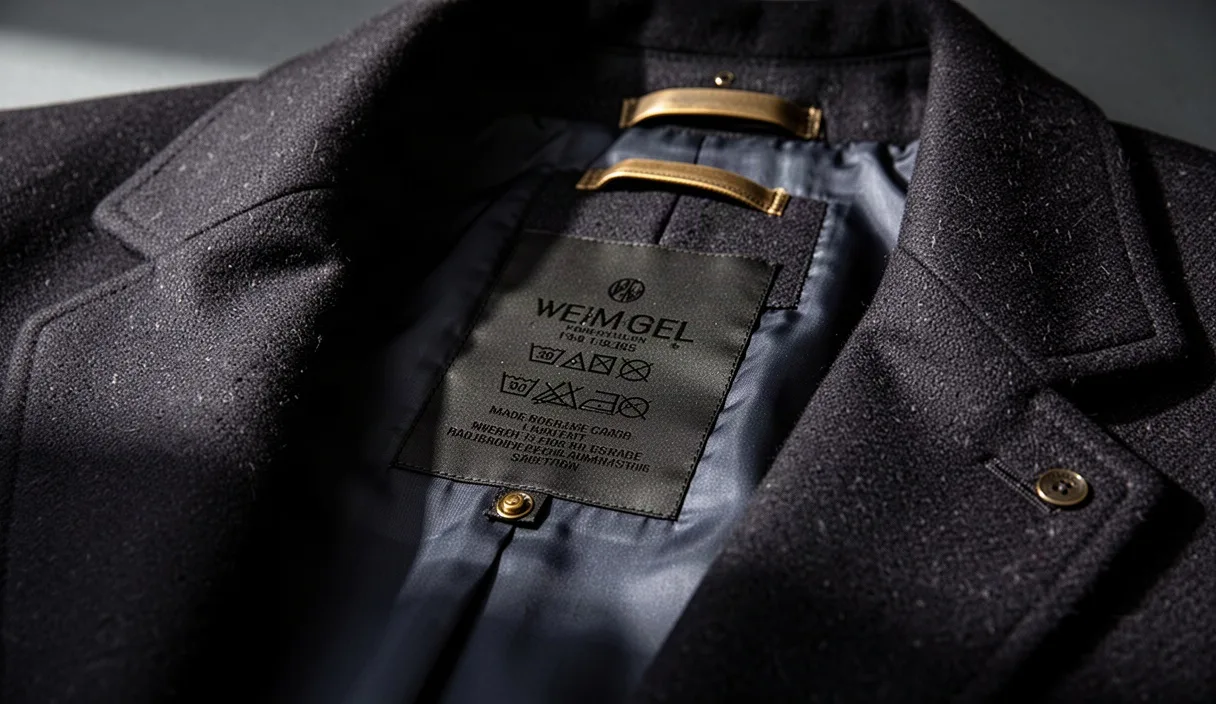

Every garment you own came with a set of instructions stitched into a seam, and most people never read them until something has already gone wrong. A wool sweater comes out of the dryer three sizes smaller, a black shirt bleeds dye onto a white one, a silk blouse gets a water stain that never fades. Care labels exist to prevent exactly these outcomes, and the symbols on them are not decorative. They are a compact technical language that tells you the safest way to clean, dry, and press a specific piece of fabric.
Learning to read that language takes less time than replacing one ruined sweater. This guide breaks down what each symbol actually means, which instructions you can bend without consequence, which ones you cannot, and how to build a sorting habit that protects your clothes without turning laundry into a research project.
Why care labels exist and who sets the standards
Care labels are not a marketing add-on. In the United States, the Federal Trade Commission has required permanent care labels on most textile garments since 1971 under the Care Labeling Rule, specifically so consumers and dry cleaners have a reliable, legally enforceable source of cleaning instructions. If a garment is damaged after following its label correctly, the manufacturer, not the consumer, is on the hook.
The symbols themselves are standardized internationally, primarily through ISO 3758, with regional variations maintained by groups like GINETEX in Europe and the American Society for Testing and Materials (ASTM) in the United States. This is why a shirt made in Portugal and sold in Chicago can carry symbols that are understood by a dry cleaner in Tokyo. The shapes are consistent, but the specific details (dot counts for temperature, bar placement for cycle intensity) can vary slightly between the US system and the international one.
Manufacturers test each fabric and dye combination before printing a label. A cotton-polyester blend dyed with reactive dyes behaves differently under heat than the same blend dyed with disperse dyes, so the label reflects testing results, not a generic guess. That is why two shirts that look identical can carry different wash instructions.
Washing symbols explained
The washing symbol is a basin shape, and nearly everything about machine versus hand washing, temperature, and agitation is encoded in how that basin is drawn.
- Plain basin with water: Machine washable, safe at any normal setting unless a temperature is specified.
- Numbers inside the basin (30, 40, 60, 95): Maximum water temperature in Celsius. A 30 means cold wash only; a 95 (common for bed linens) means near-boiling is fine.
- Dots instead of numbers: Used on US labels. One dot equals cold (30°C/86°F), two dots warm (40°C/104°F), three dots hot (50°C/122°F), and so on.
- Hand with the basin: Hand wash only, typically meaning the fibers (often wool or silk) cannot tolerate machine agitation even on a gentle cycle.
- Basin with an X through it: Do not wash at all. This usually applies to garments that must be dry cleaned exclusively, such as structured blazers with fused interfacing.
- Bars beneath the basin: Indicate cycle intensity. No bar means normal cycle; one bar means permanent press; two bars mean gentle or delicate cycle.
A practical example: a merino wool base layer labeled with a basin, a single dot, two bars, and a hand symbol underneath is telling you cold water, delicate cycle, and ideally hand washing if you want to minimize felting. Ignoring the bars and running it on a normal cycle is a common way wool shrinks even when the temperature was technically correct.
Drying and ironing symbols explained
The drying symbol is a square, sometimes with a circle inside it for tumble drying, and the ironing symbol is a simple iron outline with dots indicating heat level.
| Symbol | Meaning | Typical fabric |
|---|---|---|
| Square with circle, no dots | Tumble dry, any heat | Cotton basics, towels |
| Square with circle, one dot | Tumble dry, low heat | Synthetics, athletic wear |
| Square with circle and X | Do not tumble dry | Wool, silk, printed graphics |
| Square with horizontal line | Dry flat | Knitwear, bras |
| Square with vertical lines | Line dry (drip dry) | Linen shirts, rayon |
| Iron with one dot | Low heat (up to 110°C/230°F) | Synthetics, silk |
| Iron with three dots | High heat (up to 200°C/390°F) | Cotton, linen |
| Iron with X | Do not iron | Sequined or coated fabrics |
Dry flat and line dry look similar but matter differently. Drying a cotton sweater flat prevents the weight of wet fibers from stretching the shoulders on a hanger. Line drying a rayon blouse prevents the heat damage that even low tumble settings can cause to that fiber, which is notoriously heat-sensitive despite looking sturdy.
Bleaching and professional care symbols
The bleaching symbol is a triangle, and it tells you whether, and what kind of, bleach is safe. A plain triangle means any bleach is fine. A triangle with two diagonal lines inside means only non-chlorine (oxygen-based) bleach is allowed, which covers most colored cottons. A triangle with an X through it means no bleach at all, a common instruction on dark synthetics and anything with spandex, since chlorine bleach breaks down elastane fibers over repeated exposure.
Professional care symbols use a circle. A plain circle means dry clean only. Letters inside the circle (P, F, or W) tell a professional cleaner which solvent class to use, information that matters to them more than to you at home, since most consumers cannot buy those solvents retail. A circle with an X means the item cannot be dry cleaned at all, which shows up occasionally on items with certain plastic trims or coatings that solvents would dissolve.
If you see a dry clean symbol and don't own a washer that offers a comparable gentle option, it's worth taking the garment to a professional cleaner rather than guessing. A cleaner can also tell you, before treating a stain, whether a fabric is likely to bleed or shrink, something a label alone cannot fully predict for every garment.
Which instructions are flexible
Not every care instruction carries the same risk if you deviate from it. Temperature maximums are usually conservative buffers built in by manufacturers to avoid liability, so washing a "40°C max" cotton t-shirt at 30°C instead will not hurt it, it is simply more cautious than necessary.
Tumble-dry-low versus air-dry is another area with some flexibility for sturdy fibers like cotton and polyester. A cotton t-shirt labeled "dry flat" will usually survive an occasional low-heat tumble dry without visible damage, though doing this every single wash will shorten its life through repeated fiber abrasion and heat exposure.
What is not flexible: anything marked "do not bleach" on dyed or spandex-blend fabric, anything marked "dry clean only" on structured or lined garments like suit jackets, and anything specifying cold water on wool or silk. These instructions reflect fiber chemistry, not manufacturer caution, and ignoring them produces damage that cannot be reversed.
What happens when you ignore a label
The most common failure is shrinking wool or silk by washing in hot water or drying on high heat. Wool fibers have a scaled surface that locks together permanently when agitated in heat and moisture, a process called felting. Once felted, there is no way to reverse it; the sweater that fit is now a sweater that fits a child.
Dye bleeding is the second most common issue, especially with new, deeply saturated garments like dark denim or red cotton. Washing a brand-new maroon shirt in hot water with white towels can transfer enough dye to permanently tint the towels pink, even on a single wash. Cold water washing for the first three to four washes significantly reduces this risk for most reactive-dyed cottons.
Bleach damage on spandex-blend leggings or swimwear is less visible immediately but shows up as elasticity loss within a few washes, the fabric stops snapping back and starts sagging. Ironing synthetics like polyester or nylon on high heat can cause the fiber to glaze or melt on contact, leaving a shiny, sometimes crusty patch that cannot be steamed or washed out.
Common mistakes
- Washing a full load on the hottest setting because "it's just laundry," without checking whether the load contains wool or silk pieces.
- Assuming all black cotton items are colorfast and washing them with whites on the first wear.
- Tumble drying anything with a rubberized print or vinyl trim, which can melt or crack under dryer heat.
- Ironing directly on a garment with metallic thread or sequins instead of using a pressing cloth or skipping ironing entirely.
- Throwing a "dry clean only" blazer into the wash because it looks like plain wool, when it may have fused interfacing that distorts when wet.
Building a simple sorting routine based on labels
A practical system does not require memorizing every symbol combination; it requires three bins and five minutes of label-checking before the first wash of any new garment.
- Check the water temperature symbol first. Anything marked for cold wash only goes into a separate pile from anything cleared for warm or hot.
- Separate by fiber risk, not just color. Pull wool, silk, and anything with a hand-wash-only symbol into its own load, regardless of color, since these need gentler mechanical action than cotton or polyester.
- Isolate new, dark, or saturated colors for the first few washes. Wash them alone in cold water until you've confirmed, by checking the rinse water, that they are not releasing visible dye.
- Read the drying symbol before starting the washer, not after. If a piece says dry flat or line dry, lay a towel out in advance so it's ready the moment the cycle ends, preventing a damp garment from sitting bunched in the machine.
- Keep a small "dry clean" basket near the laundry area. Garments with a circle symbol go straight into it rather than getting mixed into a home wash load out of convenience.
Once this becomes routine, checking a label takes about three seconds per garment, roughly the time it takes to glance at a price tag. The payoff is not dramatic in any single wash, but it compounds: a wool sweater that is hand washed or laundered on a delicate cold cycle for its entire life will outlast one machine-washed on hot a handful of times by several years, and a dark cotton shirt sorted correctly in its first few washes will keep its color long after its mismanaged twin has faded to gray.