 Loom & Lapel

Thirty pieces sounds restrictive until you do the math: thirty well-chosen items can produce well over a hundred distinct outfits, far more than most people wear from a closet stuffed with two hundred items. The number isn't a gimmick, it's a forcing function. When you cap the count, you're forced to pick things that combine with each other instead of things that only work with one specific shirt you bought three years ago.
This guide walks through the actual mechanics of building a 30-piece capsule: what counts toward the total, how to audit your existing wardrobe before buying anything new, how to pick a palette that multiplies your outfit count, and how to avoid the common mistakes that quietly shrink versatility even when every piece looks good on its own. None of this requires a stylist or a four-figure budget. It requires an inventory, a plan, and about two weekends.
What a capsule wardrobe actually means
A capsule wardrobe is a limited, deliberately coordinated set of clothing where most pieces can be worn with most other pieces. The term comes from Susie Faux, a London boutique owner who used it in the 1970s to describe a small set of staples, later popularized in the U.S. by designer Donna Karan with her "seven easy pieces" concept in 1985. The core idea hasn't changed: fewer items, higher combination rate per item.
Thirty pieces is a common target because it's small enough to force discipline but large enough to cover a full season without repeating the same outfit more than once or twice a week. Some people run tighter capsules of 20 to 25 items, others prefer 35 to 40 if they have distinct work and leisure contexts. The number isn't sacred, but it should be fixed before you start, otherwise "capsule" creeps back into "closet."
What counts toward the 30: shirts, trousers, skirts, dresses, sweaters, jackets, coats, and shoes worn in regular rotation. What typically doesn't count: underwear, sleepwear, workout gear, formalwear for rare events, and accessories like belts or scarves, since these don't drive the combinatorics the same way. Decide your own rule here and stick to it, so you're not fudging the count later.
Counting what you already own before adding anything
Before buying a single new item, lay out everything you currently wear in a given month. Not everything you own, everything you actually put on. Most people are surprised to find they rotate through 15 to 20 items for 80 percent of their outfits while the rest of the closet sits untouched. That rotation is your real starting capsule, whether you planned it or not.
Sort what you find into three piles: items you wear and would buy again, items you wear only because nothing else is clean, and items you haven't touched in 90 days. The middle pile is where most of your wardrobe problems live. These are the pieces that fit poorly, clash with everything else, or require a specific mood to wear, and they're taking up slots that could go to something more flexible.
Write down every item in your "keep" pile with three details: color, fabric weight, and what it currently pairs with. A gray wool crewneck that only looks right with one pair of trousers is a weaker capsule candidate than a navy cotton oxford shirt that works with five. This audit usually takes one to two hours and tells you exactly how many of your 30 slots are already filled before you spend a cent.
Choosing a base palette that extends your options
The single biggest lever in a capsule wardrobe is color coordination, not item count. A capsule built around three to four core neutrals, plus one or two accent colors, produces dramatically more combinations than the same number of pieces in six unrelated colors. This is simple arithmetic: if every top matches every bottom, a capsule of 10 tops and 8 bottoms yields 80 outfit bases before you even add layers.
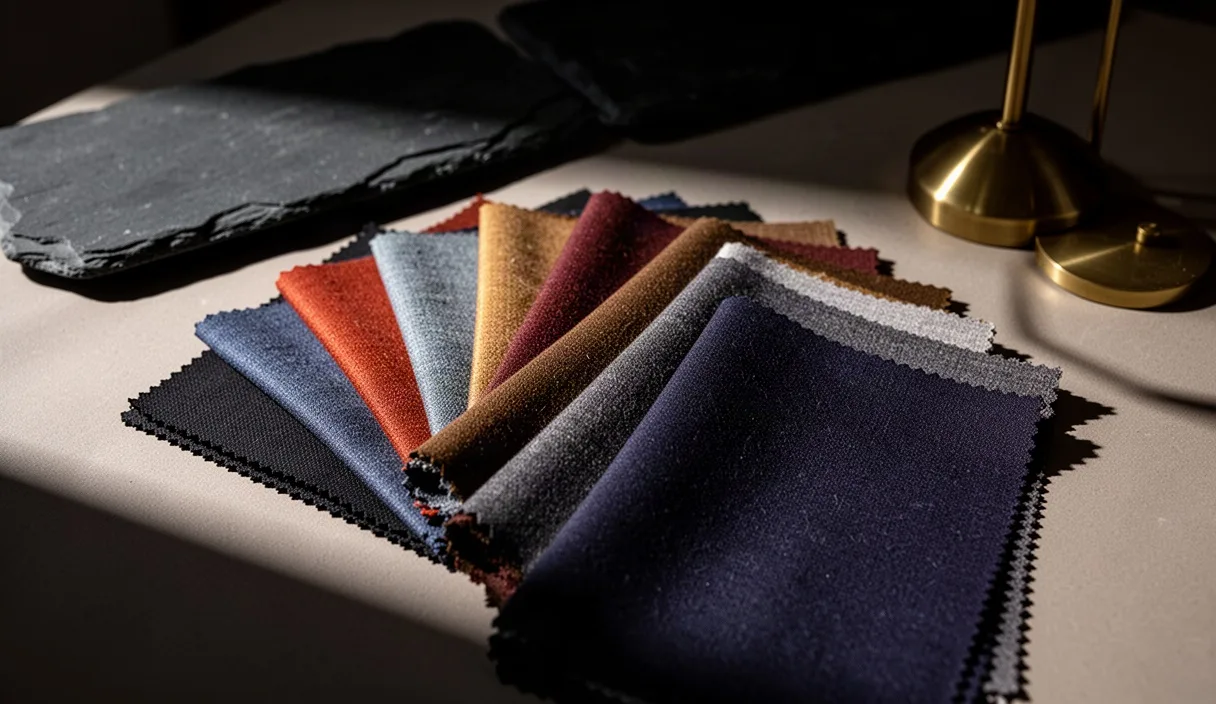
A workable neutral base for most climates is navy, charcoal or gray, and a warm neutral like camel, olive, or tan. These three anchor colors go with each other and with white, cream, and most denim washes. From there, add one or two accents, such as burgundy, forest green, or a muted blue, used sparingly in sweaters or shirts to avoid the capsule looking flat.
Test a palette on paper before buying: list your planned neutrals down one axis and accents across the other, then mark which combinations you'd actually wear. If more than a third of the grid is empty, the palette is too scattered. This is a five-minute exercise that prevents a lot of wasted purchases.
| Palette type | Approx. outfit combinations (10 tops x 8 bottoms) | Risk |
|---|---|---|
| Single neutral family (navy, gray, camel) | 60 to 80 | Can read as monotone without texture variety |
| Two unrelated families (navy/gray + olive/rust) | 35 to 45 | Requires careful pairing, more planning |
| No shared palette, item-by-item buying | 15 to 25 | High unworn rate, frequent "nothing matches" days |
Allocating slots: basics, layers, outerwear, shoes
With 30 slots total, a reasonable split for a temperate climate is roughly 8 basics (t-shirts, base layer shirts), 6 bottoms (trousers, jeans, skirts), 6 mid-layers (sweaters, cardigans), 4 outerwear pieces (jacket, coat, raincoat, blazer), and 6 pairs of shoes split between daily, dress, and weather-specific use. Adjust the ratio if your work requires more formal rotation or if you live somewhere with a short, intense winter.
Shoes are where people most often overspend slots on items that don't earn their place. A single pair of white sneakers, a brown leather loafer or derby, a black dress shoe, a weather boot, and one casual sandal or canvas shoe cover the vast majority of situations for five slots, leaving one spare for a specific need like a running shoe or a dress heel.
Outerwear deserves disproportionate attention relative to its slot count because it's worn over everything else and seen first. A tailored navy or charcoal overcoat, a packable rain shell, a casual jacket like a field coat or denim jacket, and one blazer cover almost every scenario from office to weekend to foul weather. Four pieces, enormous visual impact.
- Basics (8): plain tees, long-sleeve layers, one or two button-up shirts in core colors
- Bottoms (6): 2 to 3 trousers, 1 to 2 jeans, 1 skirt or chino as a swing piece
- Mid-layers (6): crewneck sweater, cardigan, quarter-zip, one textured knit
- Outerwear (4): overcoat, rain shell, casual jacket, blazer
- Shoes (6): sneaker, loafer or derby, dress shoe, boot, sandal or canvas, one spare
Testing combinations before committing to a purchase
Before adding a new item to the capsule, test it against at least five existing pieces mentally or on a hanger. If you can't name five plausible pairings on the spot, the item is a liability no matter how good it looks alone. This rule alone eliminates most impulse buys, which tend to be statement pieces that pair with nothing.
A practical test some people use: photograph every item laid flat or worn, then spend 20 minutes building outfit combinations on a phone or in a simple photo grid app. If a top only appears in one or two combinations out of the full grid, it's underperforming relative to its slot cost. This exercise takes less time than a single shopping trip and prevents buying its way into regret.
When evaluating a specific purchase, ask whether it's replacing a weaker item in the pile or simply adding to the count. A capsule wardrobe stays a capsule only if additions are matched by removals once the 30 slots are full. Treat it as a rotation, not a one-way accumulation.
Adjusting the capsule for season changes
A 30-piece capsule rarely needs to be rebuilt from scratch each season, it needs to be rotated. Keep a core of 18 to 20 pieces that work year-round, such as mid-weight trousers, button shirts, and leather shoes, and swap roughly 8 to 10 seasonal pieces, heavy knits and the wool coat in winter, lighter cotton shirts and canvas shoes in summer.
Store the off-season items rather than donating them immediately, since a true four-season capsule often means maintaining closer to 40 to 45 total pieces across the year with only 30 active at any time. Label storage bins or boxes by season so the swap takes minutes rather than an afternoon of searching.
Climate matters more than the generic three-season breakdown suggests. Someone in a coastal city with mild winters might keep the same 30 pieces active all year with only shoes and one jacket rotating, while someone in a region with sharp seasonal swings needs a more deliberate two-capsule system. Build the plan around your actual weather, not a generic calendar.
Common mistakes that shrink versatility
The most frequent error is buying statement pieces first and basics last, which leaves the capsule full of items that each need a specific partner that doesn't exist yet. Build the neutral base before adding anything bold.
Another common mistake is ignoring fabric weight when matching colors. A navy cotton shirt and a navy wool sweater can clash visually even though they're the "same" color, because texture and sheen affect how a color reads next to skin and other fabrics. Hold pieces together in daylight before assuming a color match works.
Finally, people often count accessories, bags, and rarely worn formalwear toward their 30 slots, which quietly steals room from the working rotation. Keep the count honest and limited to what you actually cycle through week to week.
Next steps
Start with the audit: lay out a month of actual outfits, sort into keep, maybe, and unworn, and count what's already functioning as your informal capsule. Pick a palette on paper before buying anything, and test every new item against five existing pieces before it earns a slot. Revisit the full 30 every three to four months, since fit, wear, and personal preference shift faster than most people expect. If you're unsure about tailoring or fit adjustments on key pieces like coats and trousers, a local tailor can advise on alterations more precisely than any general guide.